
Some workation cities sell the fantasy of a laptop beside a swimming pool. Brussels offers something more useful for many remote professionals: a compact European base where meetings, museums, international trains and reliable workspaces fit into the same week.
Brussels suits digital nomads who value connectivity, urban culture and access to professional networks. Coworking spaces are spread across the centre and residential neighbourhoods, public transport is straightforward, and Paris lies about 1 hour and 22 minutes away by direct train.
English is common within international workplaces, although French and Dutch remain the region’s official languages.
The main limitation involves paperwork. Belgium has no simple residence route created specifically for digital nomads, so nationality, length of stay and employment status require careful checking before arrival.
Brussels Gives Remote Workers Access to a Wider Region

Location provides Brussels with its greatest workation advantage. A remote worker can spend Friday afternoon finishing a project near Brussels-Central, take an evening train to Paris and return before Monday morning without visiting an airport.
Direct Eurostar services to Paris take about 1 hour and 22 minutes from Brussels-Midi/Zuid. International trains also connect the city with London, Amsterdam, Rotterdam, Cologne and other major European centres. Prices vary sharply, so early booking matters.
Air travel is similarly manageable. Belgian rail operator SNCB reports an average journey of around 20 minutes between Brussels and Brussels Airport-Zaventem, with direct trains serving Central, Midi, North, Schuman and Luxembourg stations. Around 113 trains operate on the route each day, according to the operator’s airport train information.
Such connections are particularly valuable for consultants, founders and freelancers whose remote schedule still includes occasional client meetings. Brussels lets them serve several European markets while keeping one temporary base.
International Life Is Part of the Daily Routine
Brussels feels international long before anyone reaches the European Quarter. Conversations on a tram may move between French, Dutch, English and several other languages before the next stop.
The Brussels-Capital Region has about 1.2 million residents representing over 183 nationalities, with roughly 100 languages spoken across its 19 municipalities. The Brussels regional government identifies French and Dutch as the two official languages, while the city’s international population has created a broad multilingual environment.
Professional opportunities extend beyond the EU institutions. Brussels hosts over 2,400 international associations, alongside consultancies, diplomatic missions, non-governmental organisations and companies working in law, sustainability, technology and public affairs. The city’s role as a centre for international associations creates a steady flow of conferences, workshops and industry events.
A nomad working in policy, communications, climate technology or international development may find relevant talks and networking events every week. Many gatherings are public, while coworking communities frequently run breakfasts, workshops and informal evening sessions.
The international character also makes arrival less intimidating. English may carry a newcomer through a short workation, particularly in coworking spaces and central hospitality businesses. Learning a few French or Dutch phrases still makes everyday interactions warmer.
Finding a Reliable Place to Work Is Easy
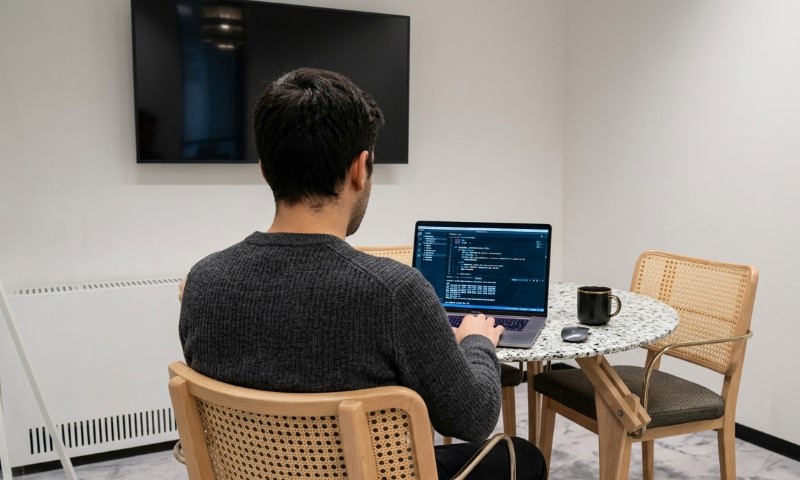
Brussels has developed a varied coworking scene rather than concentrating every shared office inside one business district. Spaces can be found near Central Station, around the European Quarter, along Avenue Louise and beside the canal.
The official tourism organisation highlights coworking spaces across Brussels, including locations aimed at social entrepreneurs, technology companies and sustainability organisations. Some occupy conventional office buildings; others have gardens, event programmes or restored industrial interiors.
Prices depend on the provider and level of access. A Silversquare day pass, for example, starts at €35 per person excluding VAT. The pass includes shared areas, internet, reception and drinks. Its flexible membership starts at €250 per month excluding VAT, based on prices displayed in August 2026.
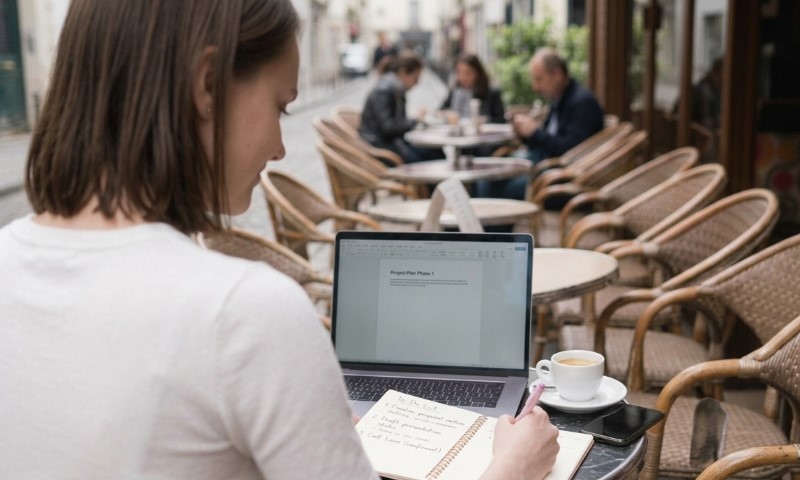
Cafés offer another option for lighter work. Flagey, Saint-Gilles, Châtelain and the city centre all have coffee shops where a laptop looks perfectly ordinary. Calls and long video meetings belong in a private booth or coworking room, especially during busy lunch hours.
Internet access should rarely become a major obstacle. Brussels operates an official public Wi-Fi network with over 200 hotspots in public spaces, metro stations and institutional buildings. Registration requires a valid phone number, and the login remains active for one year. Public Wi-Fi works best as a backup; sensitive work still deserves a trusted connection or VPN.
Which Brussels Neighbourhood Fits a Workation?
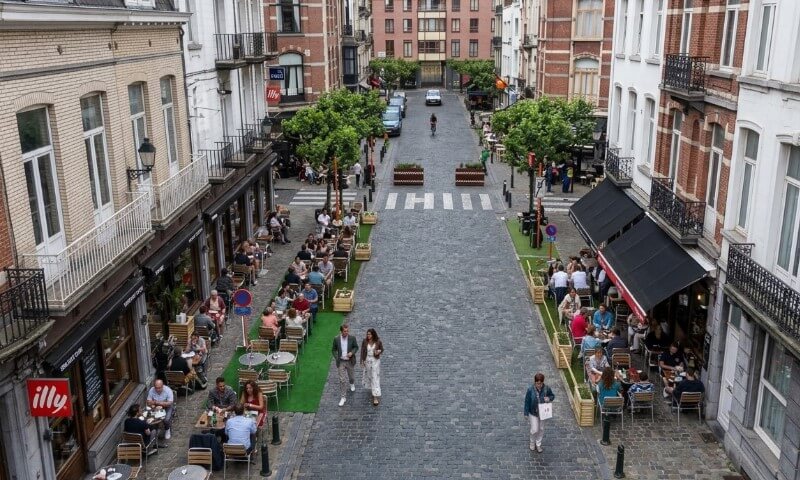
Accommodation choice shapes the experience. Brussels is compact, yet every district has its own daily rhythm.
| Area | Best suited to | What the week feels like | Main consideration |
| Historical centre | First visits and short stays | Landmarks, restaurants and major stations within walking distance | Busy streets and tourist activity |
| European Quarter | Policy, consulting and institutional work | Efficient weekdays near Schuman and Luxembourg stations | Quieter atmosphere on some weekends |
| Flagey and Ixelles | Longer stays and café workers | Cosmopolitan streets, ponds, food and cultural venues | Less convenient for very early trains from Midi |
| Saint-Gilles | Local atmosphere and creative work | Specialty coffee, neighbourhood squares and Art Nouveau streets | Several streets sit on noticeable slopes |
| Dansaert and Sainte-Catherine | Design, media and startup interests | Central location with galleries, restaurants and canal access | Evening noise varies by street |
Flagey sits between the European Quarter and several lively residential areas, pairing cultural venues with a broad restaurant scene. The official guide to the Flagey neighbourhood reflects its mix of cultural venues, markets and nightlife.
Saint-Gilles has a village-like centre and strong café culture, while Dansaert and Sainte-Catherine place visitors near the historic core without requiring them to sleep directly beside Grand-Place.
Travellers who prefer to stay inside the historic centre can look at La Bourse Hotel, which occupies a building opposite the Stock Exchange and close to Grand-Place.
Check the exact street before booking. A peaceful apartment and a late-night bar can share the same block.
Accommodation rates fluctuate around conferences, EU meetings, festivals and holiday weekends. According to the 2025 tourism report, Brussels hotels recorded an occupancy rate of 74.9%, showing that demand remains substantial across the year.
Budget calculations should also include the regional tourist accommodation tax. From 1 January 2026, the standard rate, including municipal surcharges, is €5 per accommodation unit per night.
The regional government’s accommodation tax guidance explains the updated charge. Booking platforms may display it separately from the advertised room price.
Daily Transport Costs Stay Predictable
Walking covers much of central Brussels, although rain and steep streets occasionally make the metro or tram especially appealing.
From February 2026, a standard STIB/MIVB journey costs €2.40. A one-day ticket costs €9, while contactless bank-card payments have a daily cap of €8.50. A monthly STIB pass costs €56, which may suit anyone staying for several weeks. Paper tickets can carry an additional €0.50 charge, according to the official 2026 fare schedule.
Remote workers arriving from another EU or EEA country may also retain their domestic mobile allowance under the EU’s “Roam Like at Home” rules, subject to an operator’s fair-use policy. Ukraine and Moldova joined the roaming area on 1 January 2026, as explained in the European Commission’s EU roaming guidance.
A car is rarely necessary for a central workation. Parking, traffic and the Brussels Low Emission Zone add complications, while trains and urban transport cover most practical journeys.
Check Work, Residence and Tax Rules Before Booking
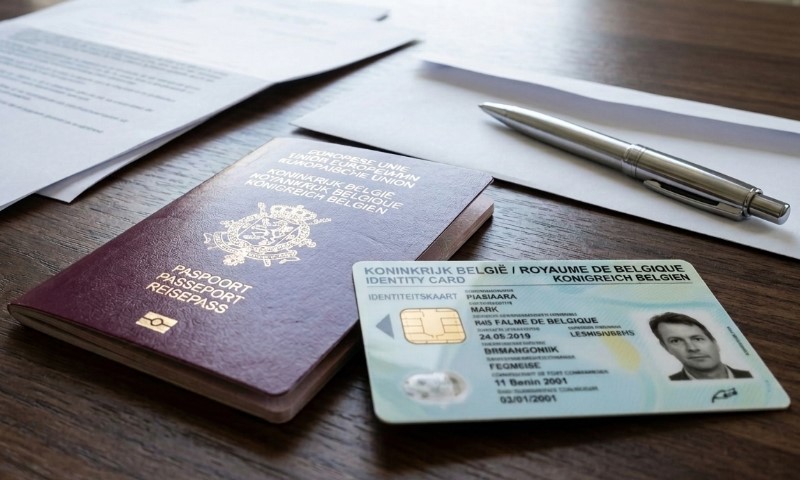
Belgium’s immigration system separates visitors according to nationality, residence length and professional status. It does not provide a broad, named digital-nomad permit comparable with programmes offered by several other European countries.
EU nationals can work in Belgium without special employment permission. Anyone staying beyond three months generally needs to register as a resident and provide documents matching their status. Updated municipal rules require EU citizens to bring a complete file to their first registration appointment. The EU employee guidance from the Brussels Commissioner for Europe and International Organisations outlines the process.
Rules are stricter for many non-EU nationals. Employees staying longer than 90 days may need a single permit, while self-employed applicants commonly require a professional card. Belgium’s single-permit information states that non-EU nationals generally need work authorisation before beginning professional activity in the country, although exemptions exist.
A short tourist admission should never be treated as automatic permission to work remotely. Employer policies, insurance, data security, taxation and social-security obligations may apply even when clients or employers remain abroad. Anyone planning a longer stay should seek advice based on citizenship, employment contract and home-country tax position.
Brussels Rewards People Who Leave the Laptop Behind
Productivity alone rarely creates a memorable workation. Brussels earns its place on the shortlist through the hours around the working day.
A morning walk can pass comic-strip murals and Art Nouveau façades. Lunch might involve a market, a Congolese restaurant in Matongé or a bowl of shrimp croquettes near Sainte-Catherine. After work, Grand-Place provides an almost theatrical change of scenery.
The square was heavily damaged during the French bombardment of 1695 and largely rebuilt afterward. Its guild houses now form one of Europe’s most recognisable urban ensembles, protected as a UNESCO World Heritage Site since 1998.
Brussels works best for digital nomads who enjoy compact cities with international energy and easy rail escapes. Accommodation requires careful timing, and Belgian administration deserves serious attention.
In return, a remote worker gains a base where professional conversations, neighbourhood life and European travel overlap naturally. The city may even persuade someone to close the laptop on time, which is a useful workation skill in its own right.