


Moving to a major European city can look manageable when the calculation starts with rent. The picture changes once transport, food, insurance and the initial cost of moving are added.
Two people in the same city can have completely different monthly budgets. Sharing an apartment and working partly from home costs far less than renting alone and paying for professional workspace.
For remote workers and independent professionals, the useful figure is the total cost of living and working in the city. Rent alone gives an incomplete picture.
Housing Is the Cost That Changes Everything
Housing normally takes the largest share of the monthly budget. Current rental data shows a clear gap between major European hubs.
HousingAnywhere’s Q2 2026 International Rent Index analyzed more than 35,000 furnished rooms and studios across 25 European cities. It also shows how quickly conditions can change from one city to another.
Room rents in Barcelona rose 8.3% year over year in Q2 2026. Amsterdam recorded an even larger increase of 10.6%, while room rents in Paris fell 4%.
Barcelona also recorded a 15% annual increase in studio rents. Its reputation as a relatively inexpensive European base no longer tells the full story.
Current Barcelona listings put the broader average rental figure at about €1,200 per month. HousingAnywhere gives a general range of roughly €1,000 to €1,400.
Berlin sits in a similar broad range. HousingAnywhere’s Berlin listings give an average of about €1,200, with many private rooms currently listed around €590 to €640.
Living alone costs more. HousingAnywhere currently places the average Berlin studio at about €850, with a stated range of €750 to €950.
Paris moves higher. Current Paris rental data gives an overall average of about €1,400 per month, with a typical range between €1,200 and €1,600.
Amsterdam is more expensive again. HousingAnywhere currently reports an average Amsterdam rent of about €1,600, with a broad range from €1,300 to €1,900.
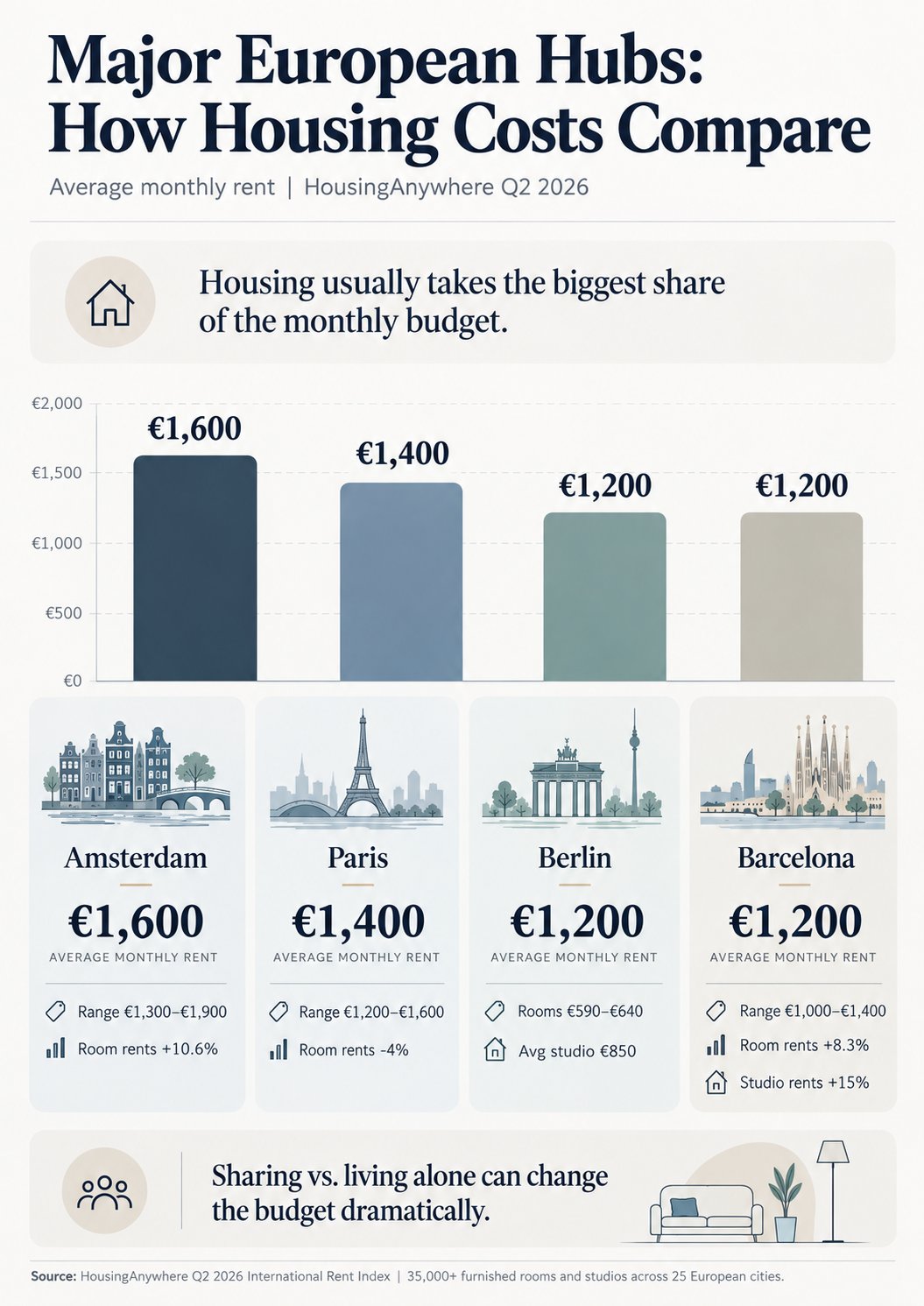
| City | Current HousingAnywhere Average | Useful Context |
| Berlin | About €1,200 | Private rooms currently appear around €590 to €640 |
| Barcelona | About €1,200 | Room rents rose 8.3% year over year in Q2 2026 |
| Paris | About €1,400 | Room rents fell 4% year over year in Q2 2026 |
| Amsterdam | About €1,600 | Room rents rose 10.6% year over year in Q2 2026 |
The first month can cost far more than the monthly average. A deposit, temporary accommodation, travel and basic setup costs may all arrive at once.
Country-specific requirements add another expense. Germany, for example, requires residents to have health insurance, so coverage becomes part of the relocation budget.
For people planning a move there, Audelio explains arranging coverage as a newcomer, including the insurance questions foreigners face when establishing themselves in Germany.
A €1,000 apartment therefore does not mean €1,000 is enough to get established. The amount required during the first month can be several times higher.
Transport Costs Can Change Where Living Actually Works
A cheaper apartment becomes less attractive when getting to meetings, clients or the city center takes an hour each way. Transport belongs in the housing calculation from the beginning.
Barcelona keeps this part of the budget relatively low. According to the official 2026 TMB fare schedule, a one-zone T-usual pass costs €22.80.
The pass covers unlimited journeys within its validity conditions. For someone living and working inside the central fare area, transport remains a small part of monthly spending.
Berlin costs more, but the ticket covers a much wider area. Deutsche Bahn lists the Deutschlandticket at €63 per month in 2026.
It covers participating local and regional public transport across Germany. ICE, IC and EC long-distance services are normally excluded.
Paris is more expensive for regular transport. The official Navigo monthly pass costs €90.80 for zones 1 to 5 in 2026.
The wider network gives people more freedom to live outside central Paris. Higher transport spending can therefore support lower housing costs.
The useful calculation is rent plus transport plus travel time. Saving €200 on housing loses part of its value when every working day involves a long trip across the city.
Berlin Is Still Competitive, but It Is No Longer Cheap
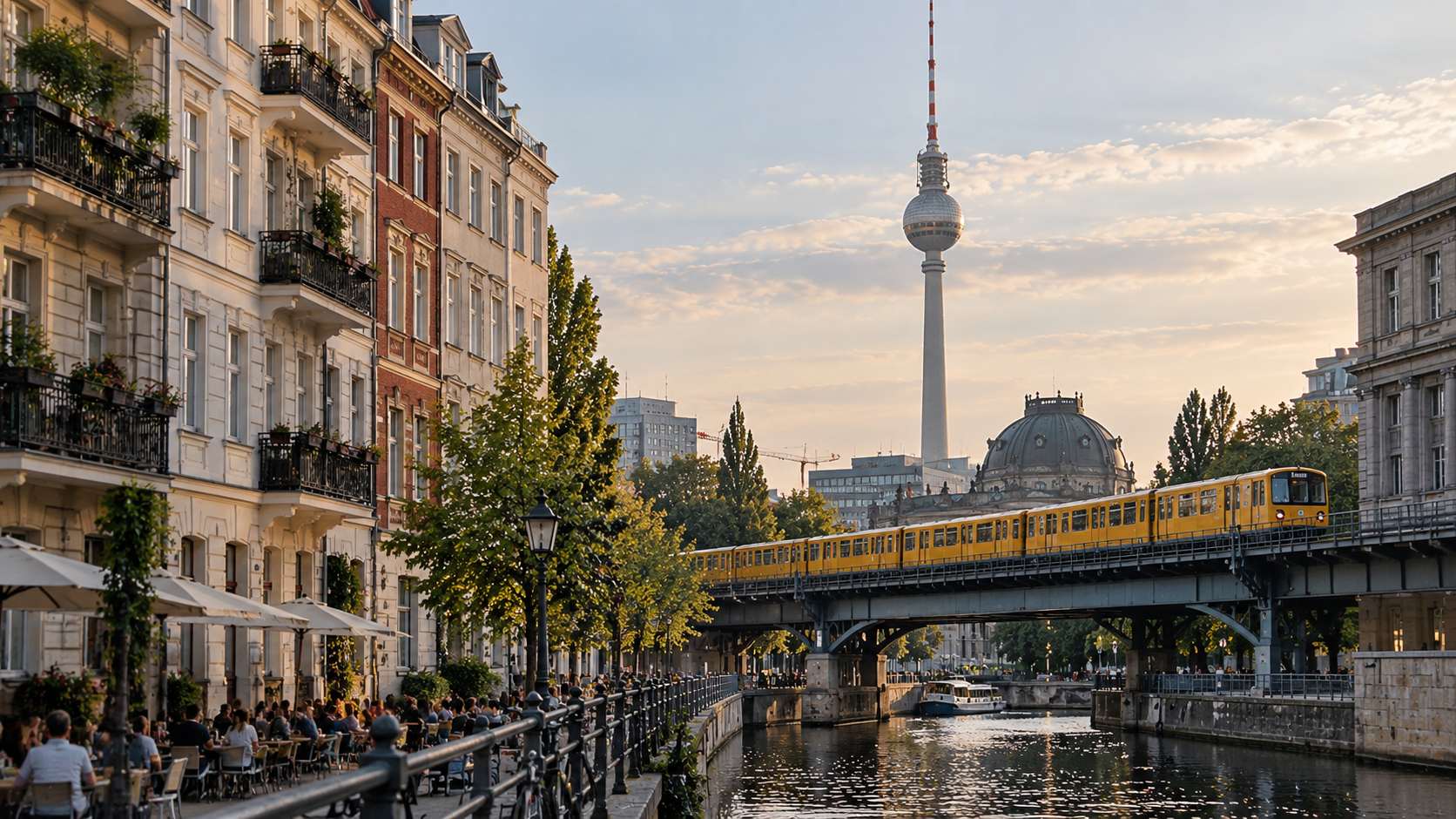
Berlin remains less expensive than Amsterdam for many newcomers, especially people willing to rent a room. Current furnished room listings around €600 still leave more room in the budget than similar accommodation in several other large hubs.
The old image of Berlin as a low-cost European capital no longer fits. HousingAnywhere currently gives the wider Berlin rental market an average of about €1,200 per month.
Working outside the home adds another expense. The European Coworking Report 2026 puts the median quoted price for a private flex-office desk in Berlin at €499 per month.
The report is based on more than 1,200 private-office quotes collected over the previous twelve months. Berlin had 662 quotes in the dataset.
A remote worker does not necessarily need to spend €499 every month. Home working, occasional day passes and flexible memberships can reduce the cost substantially.
Someone renting a €600 room and working partly from home has a very different Berlin budget from someone paying €1,200 for housing and another €500 for office space.
Barcelona Still Costs Less in Several Areas, but Housing Is Catching Up

Barcelona remains appealing because transport is inexpensive and professional workspace costs less than in several major German business hubs.
The housing advantage has narrowed. HousingAnywhere reported an 8.3% annual rise in room rents and a 15% increase in studio rents in Q2 2026.
Its current Barcelona rental page gives a broad average of about €1,200. Individual rooms can still come in far below that level, particularly in shared apartments.
Workspace is also cheaper than in Berlin according to current flex-office data. The 2026 European Coworking Report puts Barcelona at a median of €400 per private office desk.
Berlin sits at €499 in the same dataset, while Munich reaches €683. Using the same methodology makes the comparison more useful than comparing unrelated advertisements.
Cheap public transport strengthens Barcelona’s position. A €22.80 one-zone monthly pass is a small expense compared with rent.
For someone willing to live outside the most expensive central areas, that transport network makes lower-cost housing more practical.
Amsterdam Shows How Housing Can Dominate the Budget
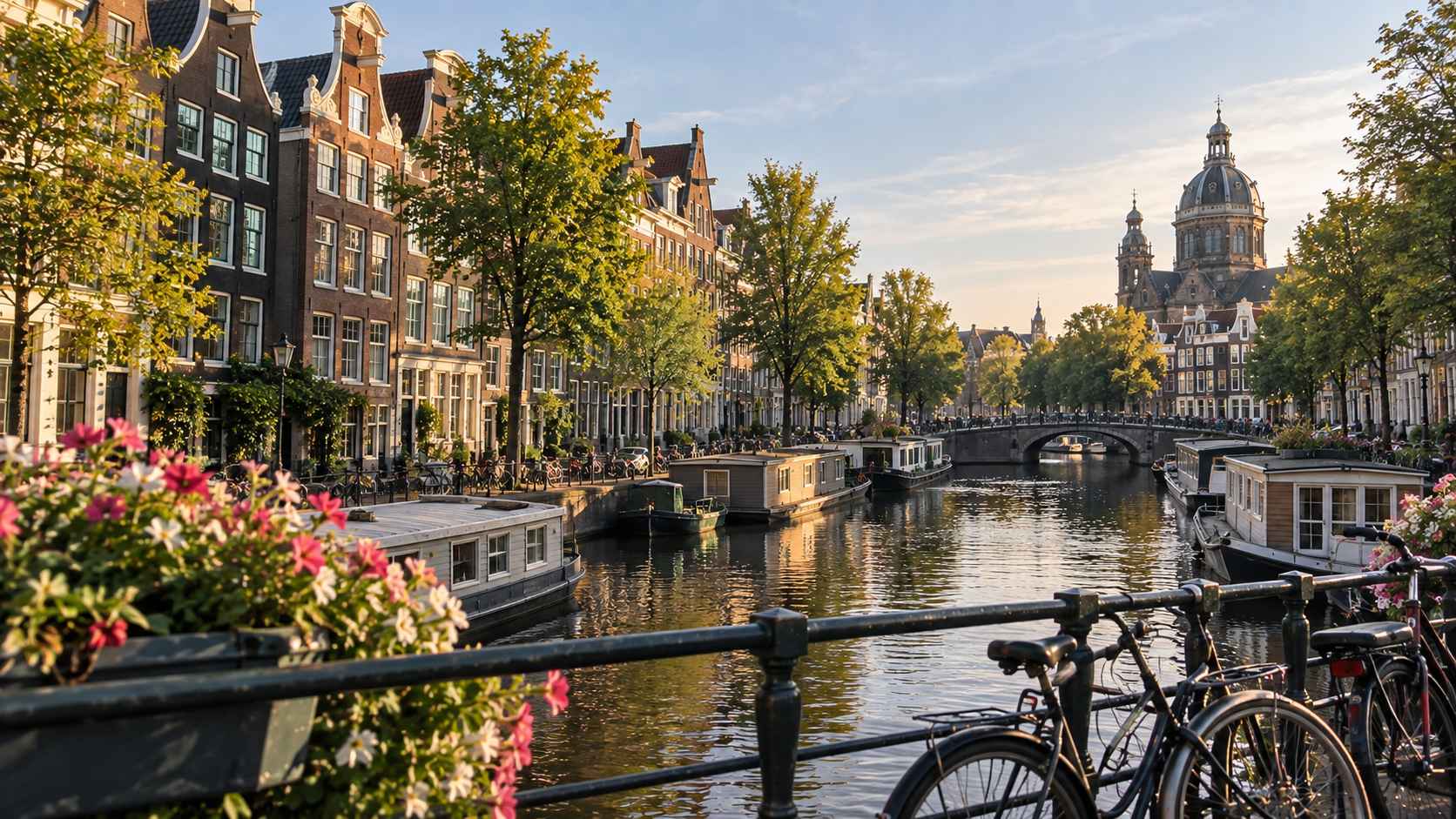
Amsterdam demonstrates why cutting small daily expenses has limited value when housing absorbs such a large share of income.
Current HousingAnywhere data places the wider average rent at about €1,600. Available one-bedroom apartments can run well above €2,000 depending on location and contract type.
The Q2 2026 Rent Index also recorded a 10.6% annual increase in Amsterdam room rents. Housing pressure therefore affects people who share accommodation as well as those renting alone.
HousingAnywhere excluded Amsterdam studios from part of its Q2 2026 studio analysis because there were not enough qualifying units for a robust city-level sample.
That limitation is important. A handful of current listings should not be presented as a reliable citywide studio average.
A person paying €1,600 each month for housing saves relatively little by cutting €50 from groceries or choosing a cheaper phone plan.
The largest savings come from housing type and location. Sharing an apartment or accepting less space changes the monthly calculation far more than small lifestyle cuts.
Paris Is Expensive, but Location Creates More Options

HousingAnywhere currently gives Paris an average rental figure of around €1,400. Its listings show private rooms around €700 to €800 and smaller studios around €1,000 to €1,150 in some areas.
The city extends far outside its most expensive central districts. Someone who does not need to be in central Paris every day can compare lower rent against the €90.80 Navigo pass.
Professional workspace does not necessarily follow the same price pattern as housing. LesCoworkings’ September 2026 Paris data tracks 239 spaces across the city.
The median price for a flexible coworking desk is €280 per month. A dedicated desk has a median of €330, while a private office reaches about €890.
LesCoworkings reports 111 public prices for flexible desks in its September dataset. That gives the figure a clearer basis than a few selected advertised memberships.
Paris therefore has an unusual cost profile. Housing is expensive, but people who accept shared accommodation or live farther from the center have more room to control other fixed costs.
Food Spending Depends More on Routine Than the City Alone
Food is easier to control than rent because habits have a large effect on the monthly total. Cooking at home and buying lunch every working day produce very different budgets.
A €15 lunch purchased twenty times per month adds €300. Coffee, snacks and evening meals can add another significant amount without any single purchase looking expensive.
Remote work also blurs food and workspace spending. Someone working from cafés may buy drinks or meals simply because remaining at the table requires regular purchases.
A €10 café bill across twenty working days equals €200. At that point, comparing the spending with a flexible workspace membership becomes reasonable.
Professional workspace may also include internet, coffee, meeting rooms and utilities. Those inclusions can replace expenses that would otherwise appear elsewhere in the monthly budget.
The First Three Months Usually Cost More
Relocation expenses arrive early. Deposits, temporary accommodation and travel can all be due before a normal monthly routine is established.
Short-term housing is generally more expensive than a stable long-term arrangement. New arrivals pay a premium because they need somewhere immediately and have less negotiating power.
Flexible workspace follows a similar pattern. Day passes are useful at first, but repeated use can become more expensive than a monthly membership.
Administrative costs also vary by country. Registration, insurance and local documentation create expenses that tourist-oriented cost guides rarely include.
A separate relocation reserve helps keep those one-time costs away from the normal monthly budget.
Someone expecting regular spending of €2,000 per month should not assume that €2,000 is enough to arrive, rent a home and establish a working setup.
Monthly Budget Needs More Than One Scenario
There is no single realistic budget for a European hub because housing and working arrangements vary too much.
A person sharing accommodation, using public transport and working primarily from home can remain near the lower end. Renting alone and paying for dedicated workspace produces a much higher total.
| Monthly Expense | Lean Setup | Higher-Cost Setup |
| Housing | €600 to €900 | €1,200 to €1,900+ |
| Workspace | €0 to €300 | €400 to €900 |
| Food | €300 to €450 | €500 to €700 |
| Transport | €23 to €65 | €65 to €100+ |
| Phone, insurance and household services | €100 to €250 | €200 to €400+ |
| Leisure and other spending | €200 to €400 | €400 to €700 |
| Total | €1,223 to €2,365 | €2,765 to €4,700+ |
The ranges are planning examples rather than citywide averages. Neighborhood, housing type and contract length create too much variation for one total to work for everyone.
Workspace creates another large gap. The same professional can spend almost nothing by working from home or several hundred euros each month for a private office.
A useful budget therefore needs at least two versions. One should cover the cheapest setup you would genuinely accept, and another should represent the lifestyle you actually expect to maintain.
The Cheapest City on Paper Is Not Always the Cheapest Base
Rent deserves the most weight in any comparison, but it should never stand alone. Transport, workspace and relocation costs all influence the final figure.
Barcelona currently combines inexpensive public transport with lower private-office prices than Berlin. Rising rents reduce part of that advantage.
Berlin still provides more housing options than Amsterdam, but neither rent nor professional workspace is cheap anymore.
Paris has high housing costs but a large public transport network and a wide range of flexible workspace choices.
Amsterdam remains particularly sensitive to housing choice. The difference between sharing and living alone can outweigh almost every other spending decision.
The strongest comparison starts with the way you actually intend to live and work. Housing, transport, professional space and relocation costs need to be calculated together before choosing a European base.