

Americans planning a short trip to Germany are facing a simple question that has become harder than it should be: Do they need to apply for anything before they go?
Right now, most U.S. citizens traveling to Germany for tourism, business, or another short stay do not need a Schengen visa. ETIAS is not required yet. EES is already active, but it works at the border, not before travel.
Germany is part of the Schengen Area, so the familiar short-stay rule still applies. Americans can stay in the Schengen Area for up to 90 days in any rolling 180-day period.
EES applies to non-EU nationals traveling for short stays of up to 90 days within any 180-day period in the 29 Schengen countries.
Right now, EES changes what happens when Americans arrive at the Schengen external border. ETIAS will later change what Americans must do before boarding a trip to Germany or another covered European destination.
What Americans Need for Germany Right Now

For a short tourist or business trip to Germany, Americans generally need a valid U.S. passport, not a Schengen visa, as long as the stay fits within 90 days in any 180-day period.
ETIAS is not required yet. EES registration is required at the external Schengen border.
EES has been fully operational across all Schengen countries since April 10, 2026. ETIAS is scheduled to start in the last quarter of 2026, with an exact launch date still to be announced.
Right now, Americans do not apply for EES. Americans do not apply for ETIAS yet. Americans do go through EES processing when entering the Schengen Area.
Scam risk is also worth taking seriously. Any site selling “ETIAS authorizations” before the official launch should be treated carefully.
Once ETIAS becomes operational, travelers should use the official ETIAS website or mobile application rather than unofficial sites that may charge extra fees or mishandle personal data.
After arrival, travelers spending time in Munich may also plan the personal side of their stay, from restaurants and nightlife to private companionship services such as Louisa.
What Is EES?
EES means Entry/Exit System. It is the EU’s digital border-registration system for non-EU travelers entering and leaving the Schengen Area for short stays.
In plain English, EES modernizes Schengen border checks. It changes the airport or land-border process, not the pre-trip application process for Americans.
EES records passport details. It collects a facial image. It collects fingerprints. It logs entry dates and locations. It also logs exit dates and locations.
For Americans, the first EES interaction can feel different than a traditional passport check. On arrival at the external Schengen border, passport details and biometric data may be recorded. Initial registration may take longer than a normal passport-control interaction. Later trips may move faster once the traveler’s data is already stored in the system.
Some travelers may be able to pre-register certain data within 72 hours before entering a European country using the “Travel to Europe” mobile app. Availability depends on the destination country and its use of the app.
EES is not a visa. EES is not ETIAS. EES does not require an online travel authorization. EES does not increase the 90-day Schengen stay allowance.
For a U.S. citizen, the key idea is simple: EES happens at the border. No separate EES application exists for ordinary travelers.
What Is ETIAS?
View this post on Instagram
ETIAS means European Travel Information and Authorisation System. It will be a pre-travel authorization for visa-exempt travelers.
ETIAS is not a visa. Americans will need it only once the system is operational.
Launch timing matters. ETIAS is scheduled for the last quarter of 2026, and the exact start date has not yet been officially announced.
Once active, ETIAS will apply to visa-exempt travelers, including U.S. citizens, visiting the Schengen Area and Cyprus for short stays. ETIAS will cover 30 European countries: the Schengen Area plus Cyprus.
For Americans thinking about Germany right now, the most important point is that ETIAS is not required yet. After launch, Americans traveling to Germany for short stays will need an ETIAS before travel. Airlines and other carriers will check ETIAS status once the system goes live.
The current published details list the ETIAS fee as €20. Validity is expected to last 3 years or until the traveler’s passport expires, whichever comes first.
ETIAS does not let Americans stay longer than the Schengen short-stay limit. It is for short stays only. Longer stays, work, study, relocation, or family reunification may require a national visa or residence permit.
EES answers a border question: who entered and left the Schengen Area, and when?
ETIAS answers a pre-travel question: is this visa-exempt traveler authorized to begin travel to a covered European country?
After ETIAS becomes operational, U.S. citizens will need travel authorization before travel, carriers will verify it before departure, and personal data will still be recorded in EES at the external Schengen border.
What EES and ETIAS Mean for Americans Flying to Germany

A direct U.S. flight to Germany is the clearest scenario. Germany is the first Schengen entry point. EES registration happens at the German airport border checkpoint. ETIAS is still not required yet.
A trip routed through Paris, Amsterdam, Zurich, or another Schengen airport works differently. EES registration happens at the first Schengen entry point, not necessarily Germany. After that, the onward flight to Germany is usually treated as internal Schengen travel.
A trip routed through the U.K. adds another layer. Britain is outside the Schengen Area. EES applies only when the traveler later enters the Schengen Area.
U.K. ETA is a separate system, so Americans combining the U.K. and Germany should not confuse U.K. ETA with ETIAS or EES.
A multi-country Europe trip, including Germany, also needs careful day counting. Schengen days are shared across participating countries. Germany does not give Americans a separate 90-day allowance.
Time spent in Germany, France, Italy, Spain, Austria, the Netherlands, Switzerland, and other Schengen destinations all count toward the same 90-day limit.
What Americans Do Not Need Right Now

Americans do not need to apply for ETIAS yet.
Americans do not need a Schengen visa for ordinary short stays in Germany.
Americans do not need to pay third-party ETIAS websites right now.
Americans do not need a separate EES application.
Americans do not get a new 90-day allowance for each Schengen country.
Americans do not need an ETIAS for the U.K., because the U.K. has its own separate ETA system.
Scam prevention matters because ETIAS has not launched yet. Official applications will be made through the official ETIAS website or mobile application once the system is live.
Relying on official channels helps travelers avoid fraudulent third-party sites that may charge unnecessary fees or misuse personal data.
Actual visas still matter in certain cases. Americans may need a real visa or residence permit for work, study, family reunification, relocation, or stays longer than 90 days.
ETIAS is not relevant for those long-stay situations.
What Americans Do Need Right Now

Americans traveling to Germany right now need a valid U.S. passport and a clear sense of the 90/180-day Schengen rule.
Extra time at passport control is also smart because EES processing can add steps, especially during first registration. Travelers should be ready to provide biometric data at the Schengen external border.
Border officers may also ask for normal entry-condition documents. Useful items can include a return or onward ticket, accommodation details, proof of sufficient funds, and a clear purpose of the trip.
EES-specific preparation is straightforward. Expect passport details to be recorded. Expect a facial image. Expect fingerprints unless exempt. Expect entry and exit dates and locations to be digitally logged.
EES is already live and replaces manual passport stamps with digital records for non-EU travelers.
For Germany-bound Americans, location matters. If Germany is the first Schengen country entered, EES happens in Germany. If another Schengen country is entered first, EES happens there before the traveler continues to Germany.
90/180-Day Rule – Part Travelers Still Get Wrong
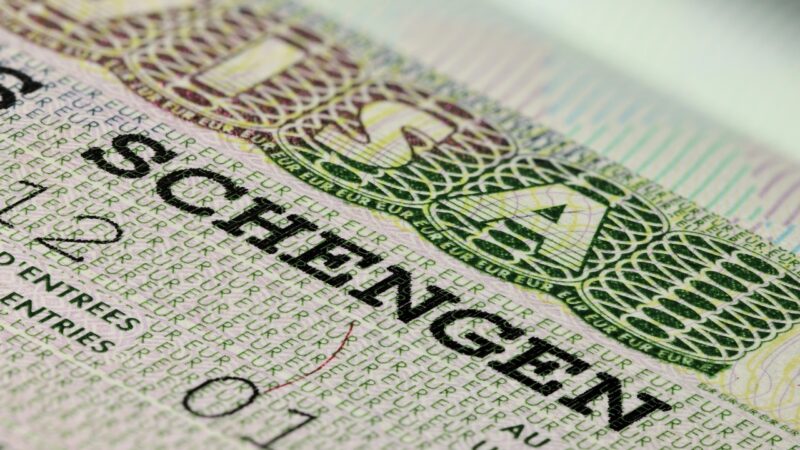
Americans can stay in the Schengen Area for up to 90 days within any rolling 180-day period.
That limit is not 90 days per country. It is not 90 days per trip. Germany is part of the shared Schengen calculation.
EES matters because it digitally records entry and exit data. Overstays may become easier to detect because the system no longer relies mainly on manual passport stamps.
Consider a traveler who spends 30 days in Germany, 30 days in Italy, and 30 days in Spain. That equals 90 Schengen days. Returning too soon after that could create an overstayer problem.
Consider another traveler who spends 45 days in Germany in spring and 45 days in France in summer. That may use the full 90-day Schengen allowance, even though no single country visit went over 90 days.
Frequent U.S. travelers often face more risk through a bad day counting than through ETIAS itself. Cumulative Schengen days are the detail that catches many Americans off guard.
Summary
@karenschaler ⚠️TRAVEL ALERT for US passports in 2026 what you need to know for your US passport right now and how 2026 travel changes to 30 countries in Europe and the UK mean you need to make sure you have what you need with your passport before traveling. My name is Karen Schaler, I’m a 3x Emmy Award-winning journalist and I travel to more than the TV show and for writing my books and movies and I’m here sharing daily travel tips and tricks and answering your Travel questions. In this travel video giving travel tips and travel hacks for traveling to Europe & the UK wi the your US passport ✔️ Passport tips ✔️ Passport Changes ✔️ US Passport ✔️ US travel tips ✔️ Travel tips 2026 ##travel##Traveltips##traveling##passport##traveltiktok ♬ original sound – Karen Schaler | Writer
For Americans traveling to Germany right now, EES matters, and ETIAS does not yet apply.
Bring a valid passport. Do not apply for ETIAS yet. Expect EES biometric processing at the Schengen external border. Track Schengen days carefully. Use only official EU channels once ETIAS launches.
EES changes what happens when Americans arrive in Europe. ETIAS will later change what Americans must do before they travel.